


Home
Prostate cancer

The clinical study in ILLUMINATE focuses on metastatic castrate-resistant prostate cancer, which is a form of prostate cancer that has spread beyond the prostate gland to other parts of the body. This typically occurs when cancer cells break away from the original tumour and travel through the bloodstream or lymphatic system to distant sites.
Moreover, the cancer no longer responds to hormonal therapy aimed at lowering testosterone levels (chemical castration) which are critical for the growth of prostate cancer cells. This means that cancer cells find ways to grow and proliferate even when testosterone levels are very low.
Critical medical need
Prostate cancer is the leading cause of death in a quarter of the world’s countries and is the most prevalent non-cutaneous cancer amongst men in Europe. In 2019, approximately 1 of 10.000 men were diagnosed with distant metastases of prostate cancer. With a European population of about 370 million men this would translate to 37.000 patients/year.
Lutetium-177-PSMA
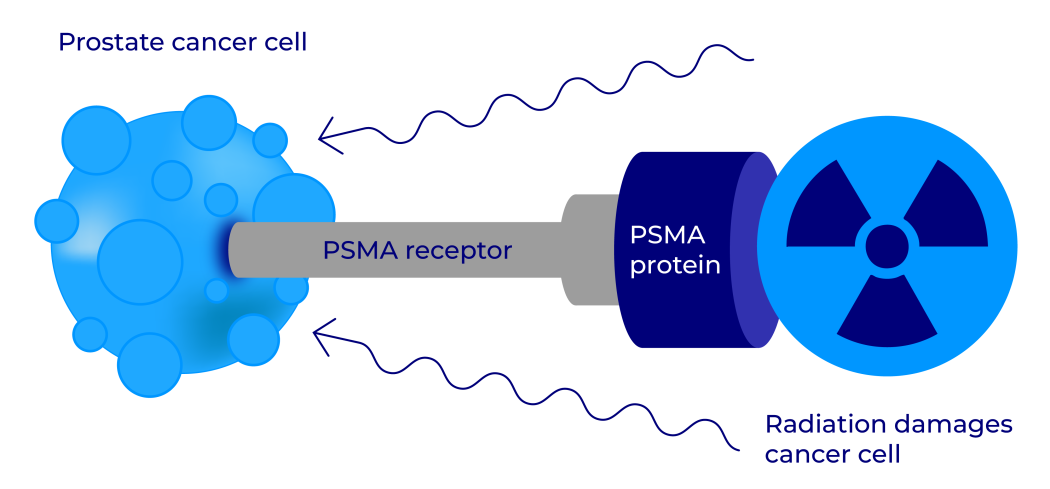
Prostate cancer cells, including those found outside the prostate, have high levels of a protein called prostate-specific membrane antigen (PSMA) on their surface. The ILLUMINATE project focuses on lutetium-177-PSMA - a highly promising targeted radioligand therapy recently approved for metastatic prostate cancer. Lutetium-177-PSMA includes a tracer that sticks to PSMA- expressing cells. This allows the radioactive lutetium-177 to effectively deliver beta-particle radiation directly to the cancer cells, thus destroying the tumour. Supplementing standard clinical care with lutetium-177 treatment has significantly prolonged the survival in prostate cancer patients.
Lutetium-177-PSMA treatment is a so-called theranostics approach wherein imaging (PSMA PET/CT before, during and after treatment) and treatment itself are based on the same administered peptide, i.e. PSMA.
Gender dimension
Prostate cancer develops in people born with a prostate - a small, glandular organ located just below the bladder. It plays a vital role in male reproductive health.
ILLUMINATE strives to account for the gender specificity of prostate cancer patients through the application of its imaging technology. The technology is equipped for all body parts, mostly gender neutral. For gender specific body parts, dedicated setups can be provided, such as dedicated coils for metabolic breast MRI.