


Home
Strategy
ILLUMINATE aims to transform the approach to theranostics-based advanced stage cancer treatment and increase overall availability of lutetium.
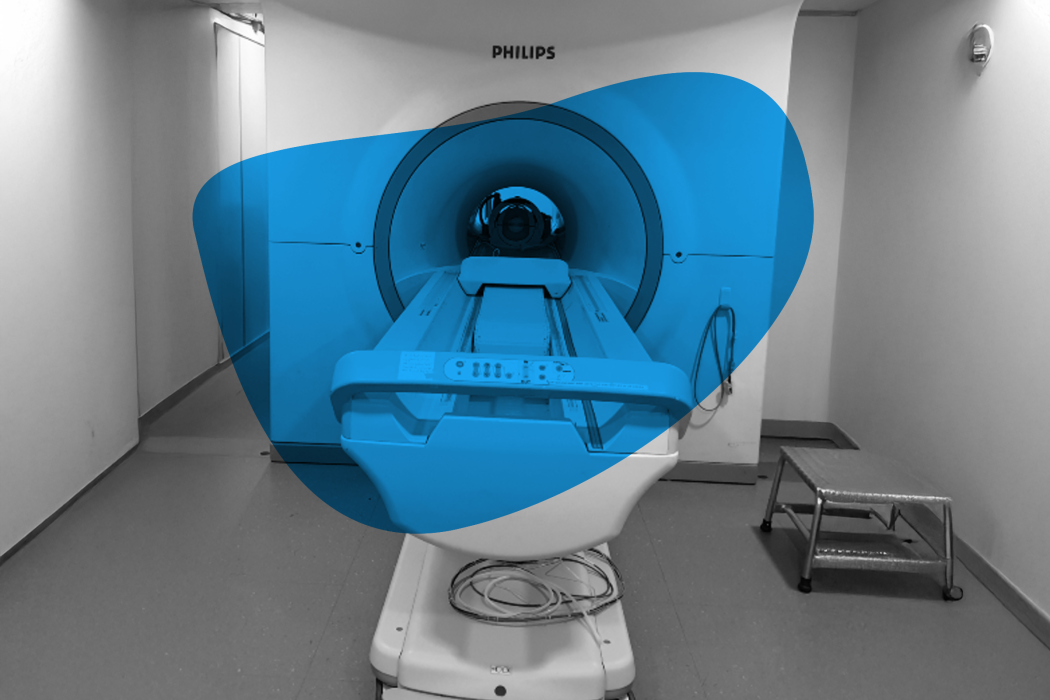
ILLUMINATE will demonstrate the unique value of recently developed Metabolic Magnetic Resonance Imaging (metabolic-MRI), visualizing energy processes in the body and detecting cancer cell growth, to significantly improve theranostics-based cancer treatment efficacy.
Theranostics is the practice of combining diagnosis, treatment, and continuous follow up of a condition. Theranostic approaches have the potential to deliver safe and effective personalized treatments for conditions such as cancer.
ILLUMINATE will further optimize the metabolic-MRI technology and the necessary decision-making tools which will aid in personalizing cancer treatment and disease management for patients with metastatic prostate cancer. Implementation of the innovative tools and technologies developed in ILLUMINATE will lead to improved treatment regimens, better dosing, prevention of side effects, and quicker identification of patients who do not benefit from treatment.
Lutetium as an effective theranostics approach to prostate cancer treatment
Major advances in treating prostate cancer have been achieved using selective targeted therapies with antibody-radioisotope combinations. Lutetium-177-Prostate-Specific Membrane Antigen (Lu-177-PSMA) is a highly promising targeted radioligand therapy recently approved by the European Medicines Agency (EMA) for metastatic prostate cancer.
Lu-177-PSMA treatment is a so-called theranostics approach wherein imaging and treatment itself are based on the same administered peptide, i.e. PSMA. Supplementing standard clinical care with Lu-177 treatment has significantly prolonged the survival in prostate cancer patients.
Importantly, ILLUMINATE strives to cover the full theranostics spectrum by delivering on both the diagnostic as well as the therapy side.
Challenges to cancer treatment efficacy
Despite the success of Lu-177-treatment, not all patients respond to it. Around 30% do not benefit from the treatment but do suffer from the side effects such as nausea and fatigue (in already strongly debilitated individuals).
Moreover, while theranostics provides a unique approach combining treatment and follow-up of disease progression, challenges remain to successfully implement this approach in clinical practice. There is a lack of objective criteria for treatment selection and monitoring to optimize efficacy and safety, which hampers treatment accuracy.
Additionally, current approaches used to predict and monitor treatment efficacy in prostate cancer lack key features to assess treatment resistance or to explain the underlying molecular mechanisms at play.
Metabolic-MRI can aid in improving treatment efficacy
Recent studies have demonstrated that metabolic-MRI can be used to rapidly and repeatedly assess diversity in tumour persistence and treatment response. Metabolic-MRI offers the capabilities to assess treatment resistance in cancer through the possibility to repeatedly acquire 3D in vivodata of multiple relevant biological indicators like increased cell proliferation and inefficient energy metabolism. These capabilities will be further developed in ILLUMINATE to a level necessary for routine clinical use.
Application of metabolic-MRI in other cancer types
Limited effectiveness of cancer treatment is an issue observed in many cancer types. An estimated 20-96% of patients with advanced staged cancer undergo prolonged ineffective treatment and continuous side effects. This results in a high patient burden and high healthcare costs.
ILLUMINATE will provide the first clinical translation of metabolic-MRI, with application to metastatic castrate-resistant prostate cancer. This work will pave the way for future expansion of the technology for use in early-stage cancer and other cancer types.
Increasing availability of lutetium
The increased use of Lu-177-based therapies has resulted in an increased demand for this isotope, leading to potential shortages and increased demands on raw materials from outside of the EU. However, availability of Lu-177 is limited due to a low number of suppliers, challenges in the manufacturing process, the scarcity of the starting material, and the dependency on non-EU countries for the starting material.
These hurdles pose serious challenges to the availability of radioisotope-based therapies. Therefore, ILLUMINATE seeks to increase the overall availability of lutetium and develop more sustainable production methods.